
Disclosure: Lifted At Home is reader-supported. Some links on this page are affiliate links, which means we may earn a commission if you buy through them, at no extra cost to you. See our Affiliate Disclosure.
This article is general information for caregivers. It is not medical advice, and it is not a substitute for a home assessment by an occupational therapist, physiotherapist, doctor or qualified installer. Home changes reduce some risks but do not remove them. If the person you support has had a fall, or is suddenly more unsteady, dizzy or confused, get them checked by a doctor or GP first.
Most older people want to stay in their own home, and most families want that for them too. “Ageing in place” (aging in place in the US) is the plan that makes it realistic. It means finding the spots in the house where an ordinary day becomes risky, and fixing them before they turn into a fall.
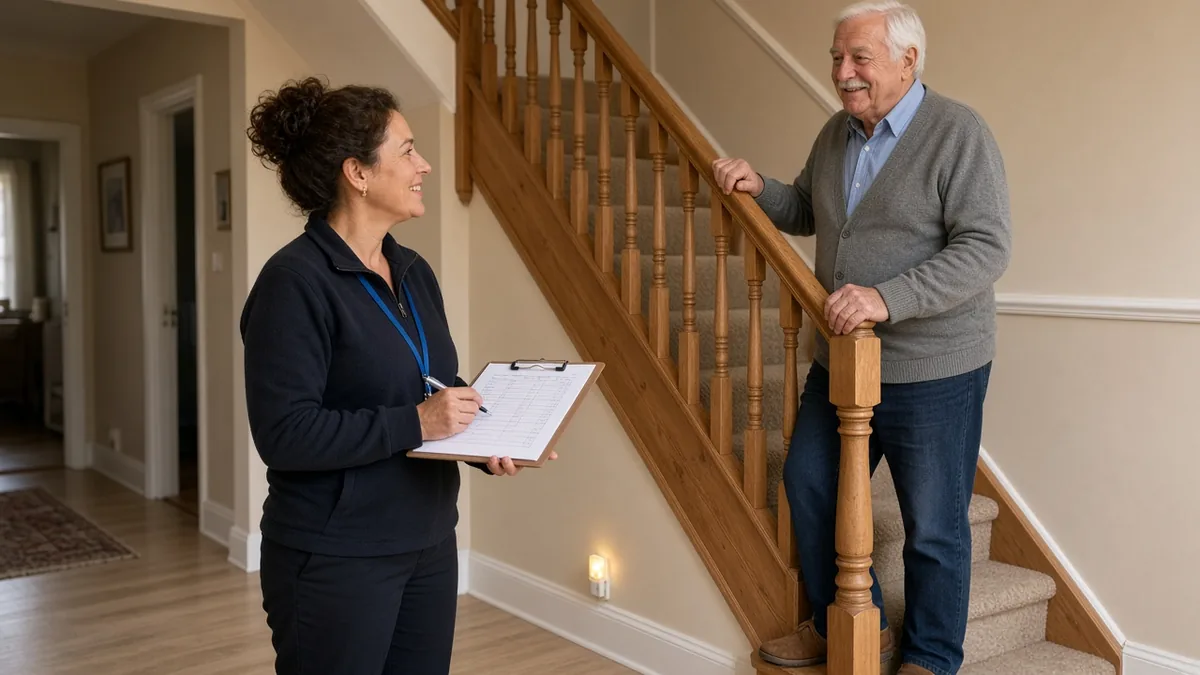
This is the checklist we would walk through with a family, one room at a time. Print it, or open it on your phone, and take it around the house with the person you care for. Watch them actually use each room, because the risk is usually in the movement, not the furniture. It is written for homes in the US and the UK. Where it links to our product guides, those guides carry the details and brand names. The general fall-prevention advice here follows the US CDC’s guidance (checked 23 November 2026): clear trip hazards, put grab bars inside and outside the tub or shower and next to the toilet, fit railings on both sides of the stairs, and add more or brighter light (CDC: preventing falls).
Before you start: three things that are not about the house
- Medicines. The CDC advises asking a doctor or pharmacist to review medicines that may cause dizziness or sleepiness, including over-the-counter ones.
- Eyes and feet. The CDC recommends an eye check at least once a year. Well-fitting shoes or slippers with a closed back are a simple fix. Loose, backless slippers on stairs are a common caregiver worry. Adaptive footwear is one option (adaptive slippers at Silverts).
- Strength and balance. The CDC recommends exercises that strengthen legs and improve balance, with Tai Chi as an example. Ask the doctor or a physiotherapist what is safe for the person you care for.
1. The way in: path, steps and front door
- Is the path even, lit and clear of moss, leaves and bins? Is there somewhere to put shopping down while finding a key?
- Is there a step or a raised threshold at the door? Count the steps and measure the total rise before you buy anything. See How to measure a doorway or step for a portable ramp.
- For a single lip or sill, read Threshold ramp vs suitcase ramp. For two steps, read Portable ramp for two home steps, which also covers when a ramp will not be safe.
- Is there a sturdy rail beside the steps, on the side the person’s stronger hand needs?
- Can emergency help get in if the person cannot reach the door? A key safe with the code shared with trusted contacts or an alarm service solves this. See the key-safe note in Medical alert vs personal alarm.
2. Hallways and stairs
- Remove or secure loose rugs and runners. Tape down, re-route or remove trailing cables.
- Can the person switch on a light before walking into a dark hall or stairwell? Light switches at both the top and bottom of the stairs help. So do plug-in or battery motion-sensor night lights along the route from bed to bathroom (motion sensor night light at Amazon US, motion sensor night light at Amazon UK).
- Are there railings on both sides of the stairs, as the CDC recommends? Rails must be fixed into solid structure by someone competent. This is not a job for adhesive or suction fittings.
- Can the person see the edge of each step? Clutter left “to take up later” on the bottom stairs is a classic trip.
- Is there space to use a walking aid in the hall, including turning at the end? If they are struggling, read Rollator vs walker. A rollator in a narrow hall can be harder to manage than a frame.
- If the stairs themselves are becoming the problem, that is the time for a professional assessment. Stairlifts and moving a bedroom downstairs are big decisions, not quick purchases.
3. Bathroom
Getting in and out of the bath or shower, and up from the toilet, are the transfers caregivers worry about most.
- Is there a grab bar where the person actually reaches: by the tub or shower entry, inside the shower, and beside the toilet? If you cannot drill (rented homes, tiles you cannot damage), read Grab bars when you cannot drill the tiles before you rely on suction bars.
- Do they need to sit to wash? Read Shower chair vs transfer bench to match the seat to the bath or shower you actually have.
- Is the toilet a comfortable height to sit on and stand up from? A raised toilet seat or toilet frame can help some people. Measure first, and check the maker’s fitting and weight limits (raised toilet seat at Vive Health, raised toilet seat at MedEquip Shop, raised toilet seat at Amazon UK).
- Is there a non-slip mat inside the tub or shower that sits flat and is cleaned? Is there a dry, flat bath mat outside, not a curling one?
- Can the bathroom door be opened from outside if someone falls against it?
- Is the water temperature safe? If scalding is a worry, ask a qualified plumber about thermostatic controls.
- Can they reach soap, towel and toilet paper without twisting or standing on one leg?
4. Bedroom
- Is the bed a height they can sit on with feet flat and stand from without a big push? Too low and too soft are both problems.
- Is there a lamp or switch they can reach before they stand up? A night light on the route to the toilet helps.
- Is the route from bed to bathroom clear at night: no shoes, laundry baskets or pet beds in the way?
- Is dressing a struggle, with bending to feet, buttons or zips? Read Sock aid, button hook and dressing stick. Sitting down to dress is safer than balancing on one leg. Adaptive clothing can also help (adaptive clothing at Silverts).
- Bed rails and bed handles can help some people, but they carry risks, including entrapment. Get advice from an occupational therapist and follow the maker’s fitting instructions exactly before using one.
- Is there a phone or alarm button within reach of the bed?
5. Kitchen
- Are everyday things (mugs, plates, kettle, the tea caddy) kept between hip and shoulder height, so no one climbs on a step stool?
- Is a reacher or grabber kept where it is actually needed (reacher grabber at Amazon US, reacher grabber at Amazon UK)?
- Are spills wiped up straight away? Is the floor non-slip, and is there no loose mat in front of the sink?
- Can they carry a hot drink safely while using a walking aid? A rollator with a tray, a trolley, or a seat at the counter may be safer than carrying.
- Is there a working smoke alarm, and (if there is a gas or solid-fuel appliance) a carbon monoxide alarm? Test them.
6. Living room
- Is their usual chair firm, with arms, at a height they can stand up from? Watch them do it.
- Is there a clear path through the room, wide enough for any walking aid? Move coffee tables and footstools out of the walking line.
- Are cables, magazines and pet toys off the floor?
- Is the lighting good enough in the evening, not just one lamp in a corner?
7. Getting out and about
- Do they use a walking aid outdoors that they leave inside, or the other way round? Make sure the right aid is at the right door.
- If car trips are hard, read Folding a rollator for the car or boot before buying a new rollator.
- Do they go out alone? If so, a mobile alarm with GPS, or a phone they will actually carry, matters more than any home gadget.
8. If they fall: getting help
- Does the person have a way to call for help from the floor in every room, including the bathroom and garden?
- Do they live alone, or spend long periods alone? If so, look at a monitored alarm, with or without fall detection. Our guide Medical alert vs personal alarm compares US and UK services and explains what fall detection can and cannot do.
- Is a list of medicines, conditions and emergency contacts somewhere obvious, such as the fridge door or the alarm service’s records?
- Have you talked through, calmly, what they would do if they fell and could not get up? Ask a physiotherapist whether learning to get up safely, or how to stay warm and wait, is right for them.
When to call in a professional
Call in a professional if transfers (bed, chair, toilet, bath) are getting harder, if there has been a fall, or if you are thinking about bigger changes like a stairlift, a walk-in shower or moving the bedroom downstairs. An occupational therapist can look at the person and the home together. That is very different from a product checklist.
- In the UK, the NHS says anyone can ask their local council’s social services for a free needs assessment. It may be done by an occupational therapist or social worker, and it can lead to equipment such as a walking frame or personal alarm. It may also lead to a separate home-adaptations assessment for things like grab rails or a walk-in shower (NHS: getting a care needs assessment). You will generally be expected to contribute to the cost of social care after a financial assessment.
- In the US, start with the person’s doctor. The CDC advises asking a doctor or health care provider to evaluate falls risk. Ask whether a home safety evaluation by an occupational or physical therapist is appropriate, and what their insurance covers. Coverage rules vary by plan.
A printable one-page version
| Room | Check | Our guide |
|---|---|---|
| Entrance | Steps measured, rail, lighting, key safe | Measure for a ramp, Threshold vs suitcase ramp, Ramp for two steps |
| Hall and stairs | No loose rugs or cables, rails both sides, switches top and bottom, night lights | Rollator vs walker |
| Bathroom | Grab bars at entry, in shower and by toilet; seat for washing; toilet height; non-slip mats | No-drill grab bars, Shower chair vs transfer bench |
| Bedroom | Bed height, light before standing, clear route at night, seated dressing | Dressing aids |
| Kitchen | Everyday items at waist to shoulder height, reacher, no loose mats, alarms tested | |
| Living room | Firm chair with arms, clear walking line, good evening light | |
| Out and about | Right aid at the right door, car transfers | Folding rollator for the car |
| Getting help | Way to call from the floor in every room; monitored alarm if alone | Medical alert vs personal alarm |
Bottom line
Do one room at a time, starting with the routes the person uses most at night: bed to bathroom, and the bathroom itself. Fix the free things first: rugs, cables, clutter and light bulbs. Then add the equipment that matches what you actually saw, and plan how they would get help if they fell. When transfers are getting harder, stop shopping and ask for an assessment. It is free from the council in the UK, and in the US you can start with the person’s doctor.